
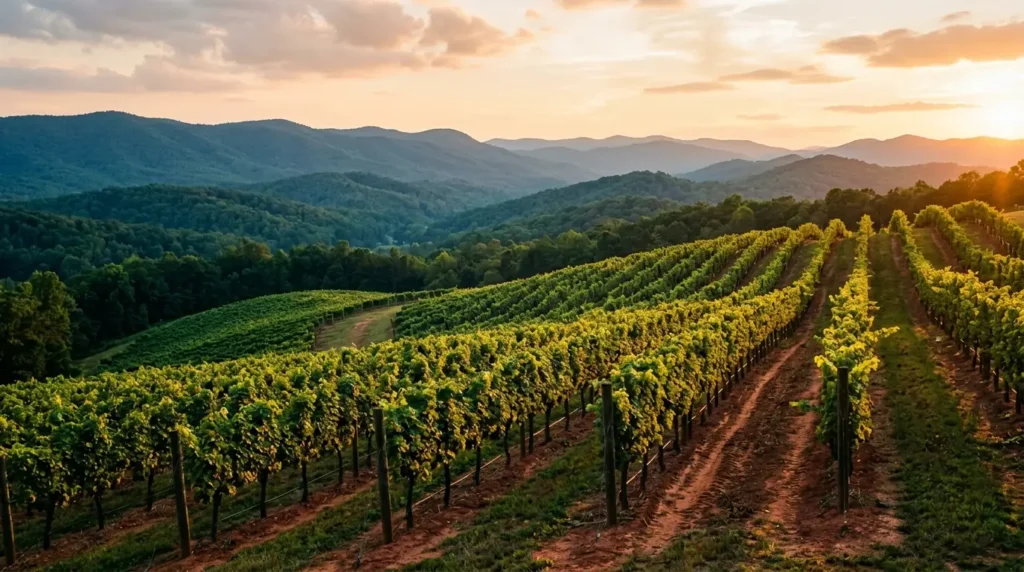
The Dahlonega Plateau AVA puts a dozen or more vineyards within a short drive of downtown Dahlonega. Most sit five to thirty minutes out on winding mountain roads, pouring Cabernet Franc, Petit Manseng, and other varietals grown in the North Georgia foothills. Plan for a half-day loop and bring a designated driver.
Dahlonega sits inside the Dahlonega Plateau AVA, a federally recognized wine appellation in the North Georgia mountains. Vineyards fan out from downtown in every direction, most within a thirty-minute drive of the square.
What is the Dahlonega Plateau AVA?
The Dahlonega Plateau American Viticultural Area received federal recognition in 2018, which makes it one of Georgia’s newer wine regions. The appellation centers on the granite-underlain plateau surrounding Dahlonega in Lumpkin County, with boundaries extending into parts of Union and White counties as the ridgelines spread north and east.
Dahlonega built its identity on gold mining in the 1800s. The AVA label is the region doing something similar with agriculture: formally saying that what grows here is distinct enough to deserve its own name.
Most Dahlonega Plateau vineyards sit between 1,500 and 2,000 feet, where cooler nights slow ripening and help grapes hold onto natural acidity that flat Georgia farmland cannot produce. The result is a regional style that leans bright rather than jammy.
How far are the wineries from downtown?
The distance varies by property and route, but most established vineyards in the AVA sit somewhere between five and thirty minutes from Dahlonega’s public square. A handful of the closest are practically in town. Others require a twenty-five-minute drive on narrow rural roads through the mountains.
Wolf Mountain Vineyards is among the better-known names in the appellation, recognized for estate-grown wines and mountain views. Frogtown Cellars operates north of town with one of the area’s broader wine portfolios. Montaluce Winery and Estates combines a vineyard property with lodging and a restaurant, making it a destination for visitors who want more than a tasting room. Three Sisters Vineyards, Cavender Creek Vineyards, and Kaya Vineyard are among the other producers operating in the area.
How to plan a half-day vineyard loop
- Pick two or three properties, not fiveDriving time between vineyards plus real time at each stop fills an afternoon faster than the map suggests.
- Call ahead, especially on a fall weekendSeveral properties take reservations during harvest and leaf season, and a two-minute call saves a wasted drive.
- Settle the driver before the first pourOne person drives the whole loop. Rideshare coverage in rural Lumpkin County is thin and should not be part of the plan.
- Leave the evening in townHead back to the square for dinner rather than squeezing in one more tasting room at closing time.
Budget a half day for two or three vineyards. Each stop runs roughly an hour once you factor in the tasting itself, and the drives between properties are slower than the mileage implies on mountain two-lanes.
What to expect when you arrive
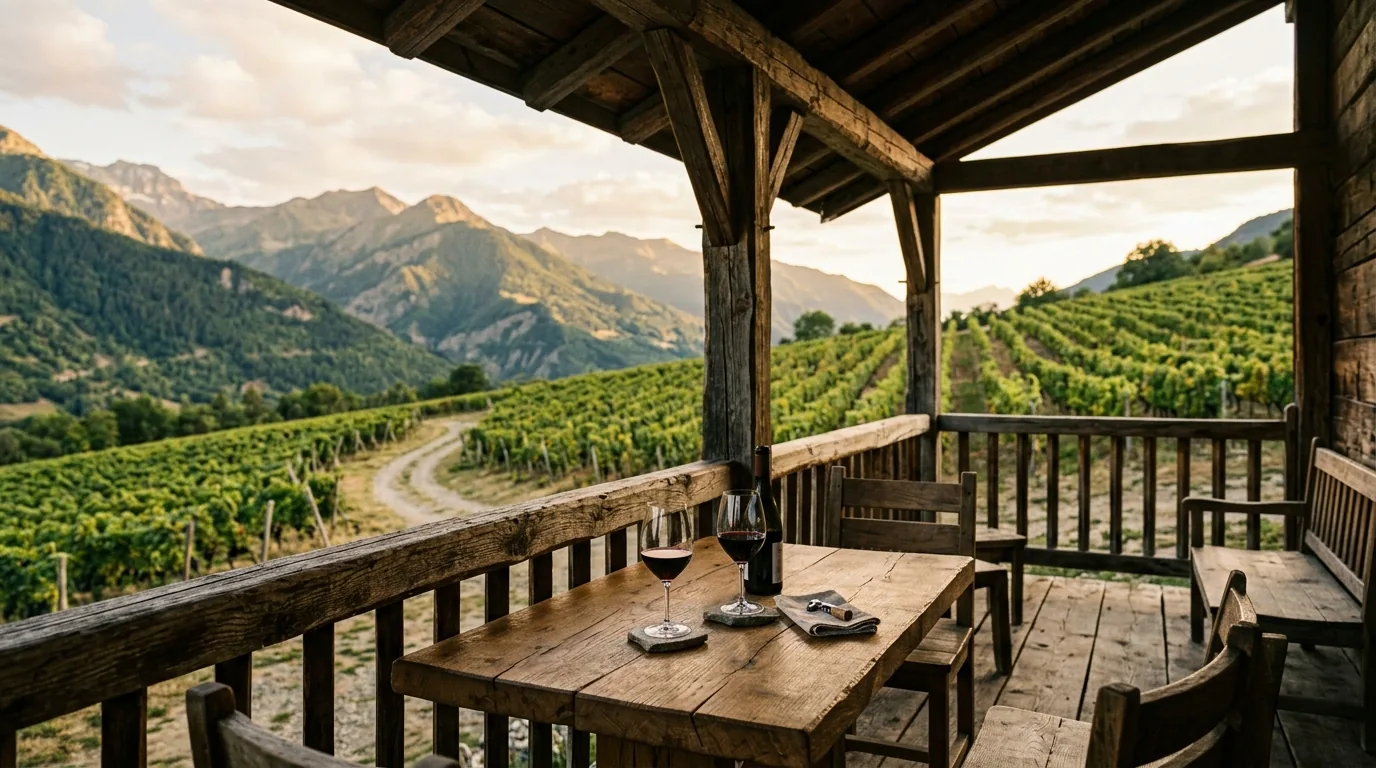
North Georgia wineries vary considerably in scale and formality. Some operate out of barn-style tasting rooms with picnic tables on the lawn. Others have full restaurant service or event facilities. Most fall somewhere in between: a tasting bar, a scenic porch, and staff who can walk you through the current releases.
Tasting fees, flight sizes, and whether a fee applies toward a bottle purchase differ from property to property and change from season to season. Every winery in the appellation publishes current pricing on its own site, so check there rather than relying on a number written down somewhere else.
Reservations have become more common at the busier properties, particularly on fall weekends when leaf-peeping visitors overlap with the harvest crowd. Weekday visits, particularly Tuesday through Thursday, tend to be less crowded and give you more time at the bar without feeling rushed.
Walkable tasting rooms versus a drive-out vineyard visit
One practical thing about Dahlonega: you do not need a car to taste local wine. The historic district has tasting rooms within walking distance of the public square that pour wines from regional producers. The estate vineyard experience is different. You are at the source, surrounded by rows of vines and mountain views, with more space and usually more quiet.
| What you compare | Downtown tasting room | Estate vineyard |
|---|---|---|
| Getting there | Walk from the square | Drive, five to thirty minutes |
| Designated driver | Not needed | Essential |
| Time to budget | An hour, mid-afternoon | Half a day for a loop |
| The setting | Historic storefront | Vine rows and ridgelines |
| Best paired with | Lunch and shopping | A full weekend in town |
Both are worth doing if the schedule allows. The downtown Dahlonega tasting room guide covers the walkable options in detail, so you can plan the right mix of in-town and drive-out stops.
Which grapes grow well in this region?
The plateau’s cooler temperatures and granite soils favor varieties that need a longer, slower growing season. Cabernet Franc is probably the grape the region has come to be most closely associated with. It shows up as a varietal bottling and as a blending component at multiple producers across the appellation.
Petit Manseng, a French white variety, also does well here. It handles unpredictable rainfall better than a lot of other whites and tends to produce wines with good structure and some aging potential. You will also find Merlot, Chardonnay, Viognier, Norton (a native American grape variety), and a handful of French and Italian cultivars that individual producers have been working with.
The best time to visit for a vineyard loop
Harvest season runs roughly late August through October, depending on the variety and vintage. During those weeks you might catch activity in the rows or see the crush pad in use, and limited-release wines sometimes appear in tasting rooms that are not available at other times of year. Visiting Dahlonega in fall covers the timing window in detail, since peak color arrives faster than most people expect.
Spring, particularly April and May, is quieter. Vines are in active growth, crowds thin out compared to fall, and mountain wildflowers are at their best along the roads between wineries. Summer visits work but call for an earlier start, because mountain afternoons in July and August get warm and open-air terrace seating is less comfortable than the photos suggest.
A winery loop pairs well with an overnight stay in town. A full weekend itinerary for Dahlonega covers how to fit the vineyard time alongside everything else the downtown offers.
Designate one driver for the day. The roads between properties are narrow mountain two-lanes, DUI enforcement in rural Georgia is not casual, and rideshare availability in Lumpkin County cannot be relied on to get a group between vineyards.
A few practical notes before you go
- Call ahead on weekends, especially in October, when several properties require reservations.
- Most wineries take cards, but a few smaller operations prefer cash for tasting fees. Check in advance.
- Allow more time than you think. One winery becomes two, and two with driving time fills an afternoon.
- All winery names, hours, and availability should be confirmed directly with each property before you make the drive.
- If you are flying home, shipping wine from Georgia to another state is possible, but destination-state regulations vary. Check them before counting on it.
Frequently Asked Questions
How many wineries are near Dahlonega GA?
The count depends on how you define the area and what you count as a working winery versus a tasting room, but visitors typically have access to a dozen or more producers within a reasonable drive of downtown. New operations have been opening in the region, so the number continues to shift.
Is Dahlonega known for wine?
Increasingly, yes. The gold rush association still comes first for most visitors, but the region has built a real wine industry over the past two decades. The Dahlonega Plateau received its AVA designation in 2018.
What is the Dahlonega Plateau AVA?
It is a federally recognized American Viticultural Area centered on the granite plateau surrounding Dahlonega in Lumpkin County. The designation acknowledges that the area’s elevation, soils, and climate produce wines distinct from those grown in other parts of Georgia.
What kind of wine is made in Dahlonega?
Cabernet Franc is the variety the region has come to be most associated with, though producers work with a range of grapes. Petit Manseng, Merlot, Chardonnay, Viognier, and Norton are among the varieties you will likely encounter across multiple tasting rooms.
Do the wineries near Dahlonega require reservations?
Policies vary by property and time of year. Weekday visits rarely require booking. Weekend visits, especially fall Saturdays during harvest and leaf season, often do. Check each winery’s website before you go.
How much does wine tasting cost near Dahlonega?
Tasting fees vary by property, by flight, and by season, and some wineries apply the fee toward a bottle purchase while others do not. Check the current pricing published on each winery’s own website before you visit.
Can I walk to wine tasting from downtown Dahlonega?
Yes. The historic district has several tasting rooms within easy walking distance of the public square. For the estate vineyard experience, you will need to drive out to the properties, most of which are five to thirty minutes from downtown.
What is the best time to visit Dahlonega wineries?
Harvest season in late summer and fall brings the most activity to the vineyards. Fall foliage makes the drives between properties scenic. Spring is quieter and less crowded. Summer works but favors an early start before afternoon heat.
Are there wineries in Dahlonega with food?
Several properties offer food, from charcuterie boards to full restaurant service, but menus and hours vary and change. Montaluce Winery and Estates is one of the better-known properties combining dining with the vineyard setting. Confirm with individual wineries before planning a meal around your visit.
Is it safe to drive between multiple wineries?
The roads between properties are narrow mountain two-lanes. Designating one person as the driver for the day is the practical answer. Rideshare availability in rural Lumpkin County is limited and cannot be relied on for a loop between vineyards.
Can I buy wine to take home from North Georgia wineries?
Most wineries sell bottles to take home. Shipping wine directly from Georgia to another state is governed by the destination state’s laws. Some states allow it, others do not. Check the regulations for your home state before counting on shipping.
Are North Georgia wineries good for a day trip from Atlanta?
Dahlonega sits roughly 65 to 70 miles north of Atlanta via GA-400, which puts it in the range of an hour to an hour and a half depending on traffic. Two or three winery visits plus a meal makes a full day without feeling rushed.
Are there any wineries that also have accommodation near Dahlonega?
Montaluce Winery and Estates is among the better-known properties to combine lodging with a vineyard setting. A few small bed-and-breakfast operations exist near winery properties in the broader appellation. Confirm current offerings directly with individual properties.
Thinking about making North Georgia wine country your address?
Talk to a local expert who knows the mountain communities around the vineyards, from Dahlonega to the surrounding Lumpkin County ridgelines.
Search all Dahlonega homes for sale at Gold Peach Realtyor call (770) 283-1223