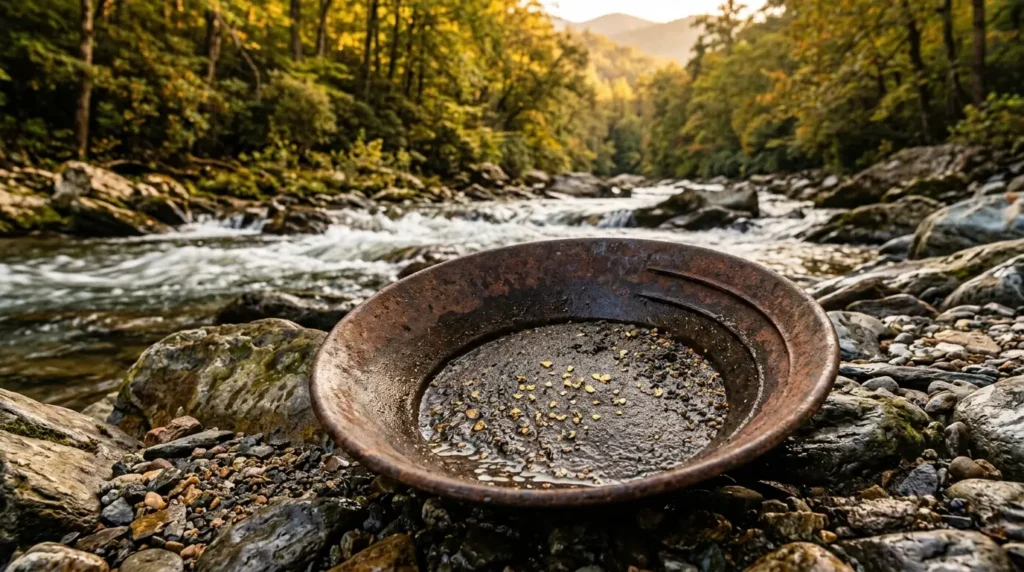
America’s first major gold rush began in Lumpkin County, Georgia, in 1828 following discoveries by prospectors like Benjamin Parks. Thousands rushed to the area, prompting the creation of the federal Dahlonega Mint in 1838. Today, this rich mining history shapes Dahlonega’s local culture, historic sites, annual events, and real estate identity across the North Georgia mountains.
America’s first major gold rush began in 1828 in Lumpkin County, Georgia, transforming Dahlonega into a historic mining center that established a federal mint and shaped North Georgia’s enduring regional identity.
The 1828 Discovery and Federal Mint Establishment
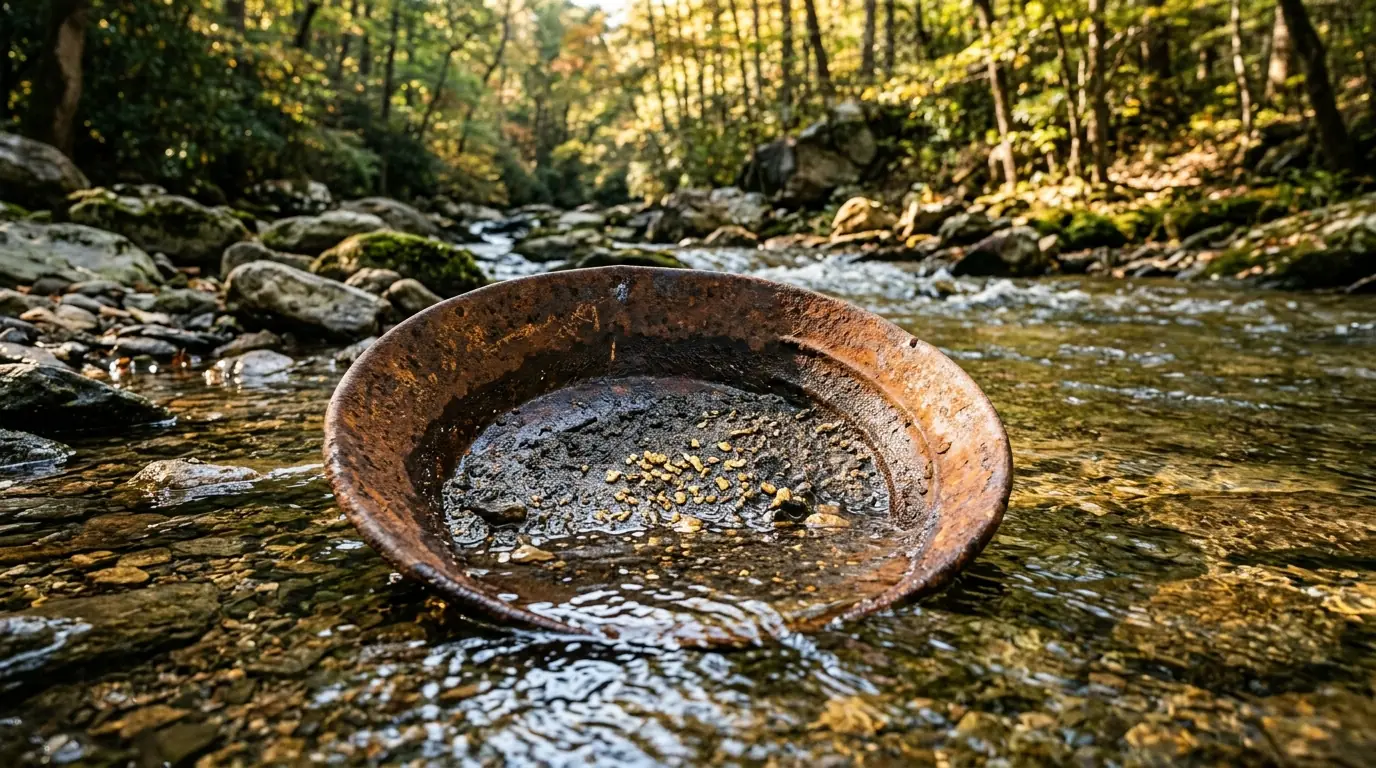
In the summer of 1828, Benjamin Parks stumbled over a rock in the hills of what would become Lumpkin County, Georgia. That discovery marked the beginning of America’s first major gold rush, drawing thousands of prospectors and shaping regional banking policy. Exploring America’s first gold rush history reveals how word spread quickly by late 1828 and 1829 about gold deposits in the North Georgia rivers and mountains.
Prospectors from across the Carolinas, Virginia, and New England flooded Lumpkin County, causing towns to form and reshape rapidly around mining sites. The gold mined in the region originated from two distinct geological formations:
| Deposit Type | Location Source | Mining Characteristics |
|---|---|---|
| Placer Deposits | Chestatee and Etowah Rivers | Free gold particles released into streambeds through natural erosion |
| Lode Gold | Bedrock of Blue Ridge foothills | Gold-bearing quartz veins running through granite bedrock |
To solve the challenge of transporting raw gold hundreds of miles to Philadelphia, Congress established a branch federal mint in Dahlonega in 1838. Operating until 1861, the facility produced gold coins bearing the distinct “D” mint mark across various coin denominations before Confederate forces seized the facility at the outbreak of the Civil War. The building later housed North Georgia College until it burned in 1878; its original site now sits at the center of the University of North Georgia campus.
Established by Congress in 1838 to eliminate dangerous transport to Philadelphia, the Dahlonega Mint produced high-purity gold coinage bearing the “D” mark for over two decades.
Historic Landmarks and Modern Gold Mining Attractions
In 1849, during the California Gold Rush, mint assayer Dr. Matthew F. Stephenson famously urged local miners to remain in Georgia by emphasizing that substantial gold deposits remained in the surrounding hills. That enduring connection to gold continues to draw visitors seeking engaging things to do in Dahlonega today.
Visitors can explore the Dahlonega Gold Museum State Historic Site inside the 1836 Lumpkin County Courthouse or tour historic underground mining tunnels and pan for gold at Consolidated Gold Mines.
The Dahlonega Gold Museum State Historic Site occupies the 1836 Lumpkin County Courthouse, which stands as the oldest public building in continuous use in North Georgia and was listed on the National Register of Historic Places in 1971. Located at 1 Public Square N, the museum features original minted coins, mining tools, historic photographs, interactive geology exhibits, and an educational film. Admission requires a nominal fee, with Georgia State Parks passes accepted.
For hands-on mining experiences, Consolidated Gold Mines at 185 Consolidated Gold Mine Rd offers underground tunnel tours, sluice gold panning where prospectors keep what they find, and gemstone mining. It stands as one of the most visited historic attractions in North Georgia.
The Cherokee Connection and Historical Legacy
Understanding the complete Dahlonega gold rush heritage requires recognizing its darker historical chapter. The discovery of gold on ancestral Cherokee lands accelerated political pressure for Native displacement.
The gold rush directly contributed to the passage of the Indian Removal Act of 1830 and the subsequent Trail of Tears from 1838 to 1839, which forcibly removed approximately 16,000 Cherokee people from their homelands.
Today, the gold rush heritage permeates local identity. The town seal features mining imagery, the dome of the Georgia State Capitol in Atlanta is gilded with Dahlonega gold, and the annual Gold Rush Days fall festival brings tens of thousands of visitors to the square. For buyers interested in Dahlonega historic homes or evaluating options when buying a home in Dahlonega , living near the historic square offers physical proximity to nearly two centuries of rich North Georgia history.
How Gold Rush History Shapes Dahlonega Today
Dahlonega was formally incorporated in 1833 as a direct result of the mining boom. The town’s name originates from the Cherokee word “dalonege,” meaning yellow money or precious yellow. From the downtown square to the gold-leaf dome of Price Memorial Hall at the University of North Georgia (founded in 1873), gold rush history is woven into daily life.
That heritage is celebrated every October during Gold Rush Days, an annual arts and crafts festival that draws up to 200,000 visitors to the historic square over a single weekend. The festival features artisan vendors, live music, gold panning demonstrations, and regional food traditions.
For individuals considering buying a home in Dahlonega or living near the historic center, this heritage creates a unique sense of place. Whether you are seeking the top things to do in Dahlonega, GA or exploring options for living near downtown Dahlonega , the city’s historic roots offer timeless appeal. To learn more about daily life in the historic center, consult our guide on living in downtown Dahlonega .
Frequently Asked Questions
When was gold first discovered in Dahlonega?
Gold was discovered in Lumpkin County in the summer of 1828 by prospectors including Benjamin Parks, initiating America’s first major gold rush.
Where is the Dahlonega Gold Museum located?
The museum is located at 1 Public Square N in Dahlonega, Georgia, inside the historic 1836 Lumpkin County Courthouse.
Can visitors still pan for gold in Dahlonega today?
Yes, attractions like Consolidated Gold Mines offer underground mining tunnel tours and gold sluice panning experiences where visitors keep what they find.
Explore Historic Real Estate in Dahlonega
Find your ideal home near historic downtown Dahlonega with expert local guidance.
Search North Georgia homes with Gold Peach Realtyor call (770) 283-1223