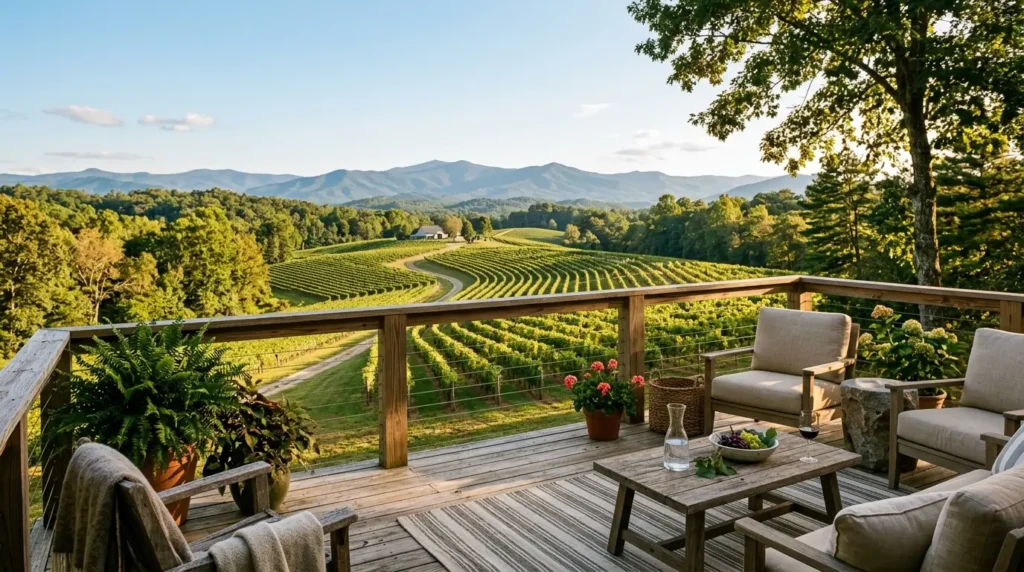
Living in Dahlonega wine country offers proximity to award-winning vineyards within the Dahlonega Plateau AVA, a vibrant tourism-driven hospitality economy, and scenic mountain views. Buyers enjoy a unique lifestyle with high quality-of-life appeal and strong short-term rental potential, all at a lower price point than established national wine regions.
Dahlonega sits at the heart of Georgia’s premier wine region, ringed by award-winning vineyards where mountain lifestyle, a thriving tourism economy, and world-class viticulture converge.
Georgia’s Wine Trail and Dahlonega’s Place in It
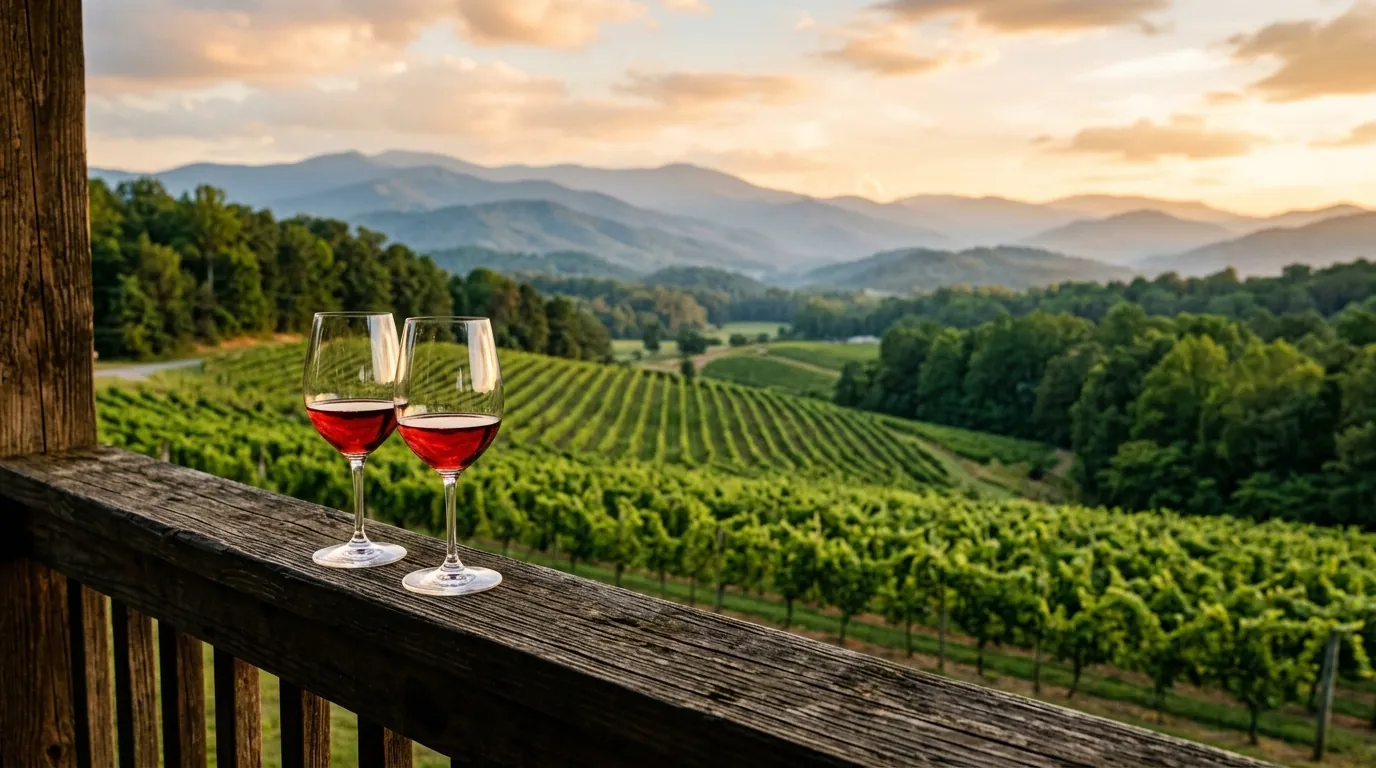
When people think of American wine country, their minds go to Napa or Sonoma. Increasingly, serious wine enthusiasts and buyers who want to live near what they love are finding their way to the North Georgia mountains. The Dahlonega Plateau American Viticultural Area (AVA), established by the TTB in 2018, gives Georgia mountain wines their official geographic identity.
Dahlonega and Lumpkin County sit squarely at the epicenter of this region. The elevation and climate produce wines with genuine regional character. While Muscadine remains part of Southern wine culture, modern regional viticulture highlights European varieties like Cabernet Franc, Merlot, Chardonnay, Viognier, and high-performing hybrid varieties. To learn more about local vineyards and tasting rooms, explore our comprehensive Dahlonega Wine Country guide .
Vineyard Proximity: Life Among the Vines
Living near Dahlonega’s wineries means enjoying weekend afternoon drives, cinematic harvest seasons against Blue Ridge backdrops, and a local social calendar filled with wine club events and harvest festivals. For buyers considering buying a home in Dahlonega , proximity to established wineries serves as a major lifestyle differentiator.
The wine trail draws significant tourist traffic, particularly on fall weekends. Properties directly on main wine trail corridors experience that traffic, while properties tucked into ridges above typically retain quiet access. Understanding local traffic patterns is an essential part of buyer due diligence.
When evaluating properties along the wine trail, prospective buyers should focus on key site characteristics that enhance both views and privacy.
- Step 1 Evaluate proximity to main wine trail corridors versus quiet mountain ridgelines.
- Step 2 Prioritize southern and western exposures for optimal vineyard views and extended sunset light.
- Step 3 Assess soil drainage and viewshed topography if planning private agricultural features.
The Tourism Economy: What It Means for Buyers and Investors
The Georgia wine trail is a meaningful economic engine for the Dahlonega area. Visitors drawn to wine country typically have household incomes above the regional average, often staying overnight and returning repeatedly. This pattern supports a resilient hospitality economy comprising lodging, dining, and specialty retail.
Properties positioned with vineyard views or tasting room proximity compete in an attractive short-term rental niche with strong booking rates and above-average nightly pricing compared to standard mountain cabin inventory.
For a complete picture of how location choices impact daily living and investment strategies, read our comparison of downtown Dahlonega vs. the mountain outskirts , as well as our detailed overview of Downtown Dahlonega vs. The Mountain Outskirts .
For buyers interested in planting their own vineyard on a larger parcel, preliminary guidance from local agricultural extension offices and established winemakers is essential before acquiring land.
Market Trends and Buyer Motivations
Buyers choosing wine country properties are often making a deliberate lifestyle transition from denser urban environments. The favorable price-to-lifestyle ratio in Dahlonega allows buyers to secure properties with authentic vineyard views at a fraction of the cost found in regions like Napa, Willamette, or the Virginia Piedmont.
To examine current market conditions and real estate inventory, review our Downtown Dahlonega real estate market update for June 2026 .
Frequently Asked Questions
How many wineries are near Dahlonega?
The Dahlonega area is home to a significant cluster of wineries within the Dahlonega Plateau AVA, with most located within 15 to 25 minutes of the downtown square along the wine trail. The exact number of operating tasting rooms changes as the region grows; contact Gold Peach Realty or the Dahlonega-Lumpkin County Chamber for the current wine trail map.
Does wine country proximity increase Dahlonega real estate values?
Properties with genuine vineyard views, wine trail proximity, and lifestyle positioning have historically commanded a premium over comparable mountain properties without those attributes — particularly in the short-term rental and vacation home market. As Georgia wine country grows in national recognition, that premium is likely to expand rather than compress.
Can I grow my own vineyard on a Dahlonega property?
It is possible on parcels with the right soil, drainage, and exposure. The Dahlonega Plateau’s elevation and climate are genuinely suitable for certain varieties. A soil assessment and conversation with established local winemakers are strongly recommended before purchasing land with vineyard development intent.
Is Georgia wine country a good short-term rental market?
Yes — Dahlonega wine country properties with strong lifestyle attributes (vineyard views, mountain character, proximity to tasting rooms) compete in an attractive short-term rental niche with above-average nightly rates. Lumpkin County STR regulations apply; verify current rules with your agent before purchasing with rental intent.
Find Your Dahlonega Wine Country Property
Explore mountain lifestyle homes and vineyard proximity properties with expert guidance.
Search North Georgia homes with Gold Peach Realtyor call (770) 283-1223
Investors comparing wine-country tourism plays with retail or office assets will find commercial property for sale in North Georgia mapped out by corridor and county.